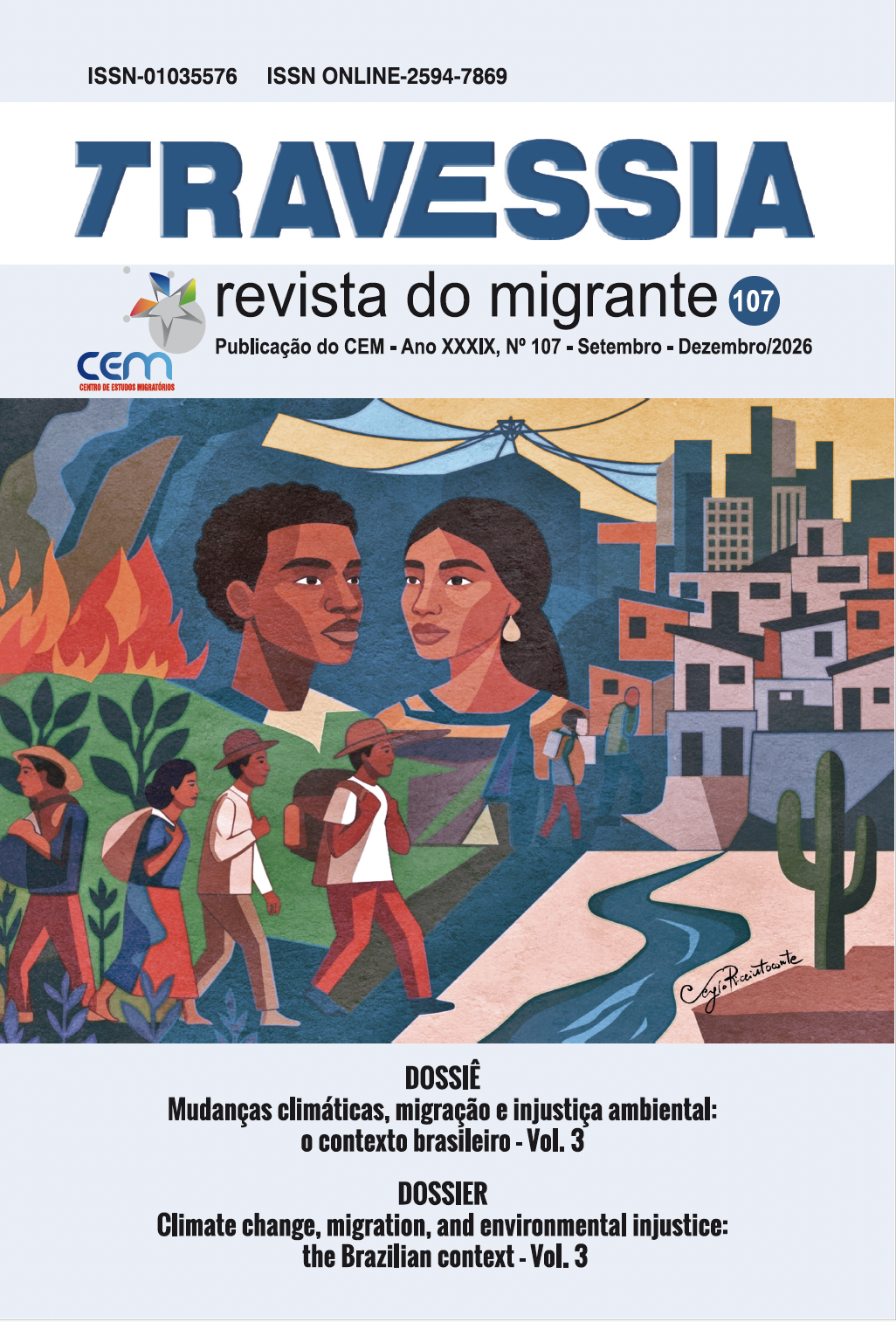
May 2024 disasters in Rio Grande do Sul: impotence and absence
Keywords:
Environmental disaster, Environmentally displaced people, Human mobility, Climate changeAbstract
In May 2024, the state of Rio Grande do Sul faced one of the most severe climate disasters in its history, marked by intense rainfall, flooding, landslides, and the collapse of both urban and rural infrastructure. The event exposed the fragility of public administration in responding to climate emergencies, revealing critical failures in prevention, sheltering, and reconstruction. Human mobility was deeply affected, with thousands of people forcibly displaced, facing overcrowded shelters, violence, discrimination, and neglect. The disaster laid bare deep social and environmental inequalities, disproportionately impacting vulnerable populations such as migrants, Indigenous peoples, quilombola communities, persons with disabilities, and children. Civil society’s voluntary response was essential for rescue and relief, standing in stark contrast to the absence of effective public policies. This memory-based narrative article discusses the structural factors that contributed to the tragedy, including the dismantling of environmental legislation and governmental negligence. It advocates for climate education and the legal recognition of forced displacement due to disasters and extreme climate events as pathways toward climate justice and the protection of human rights.