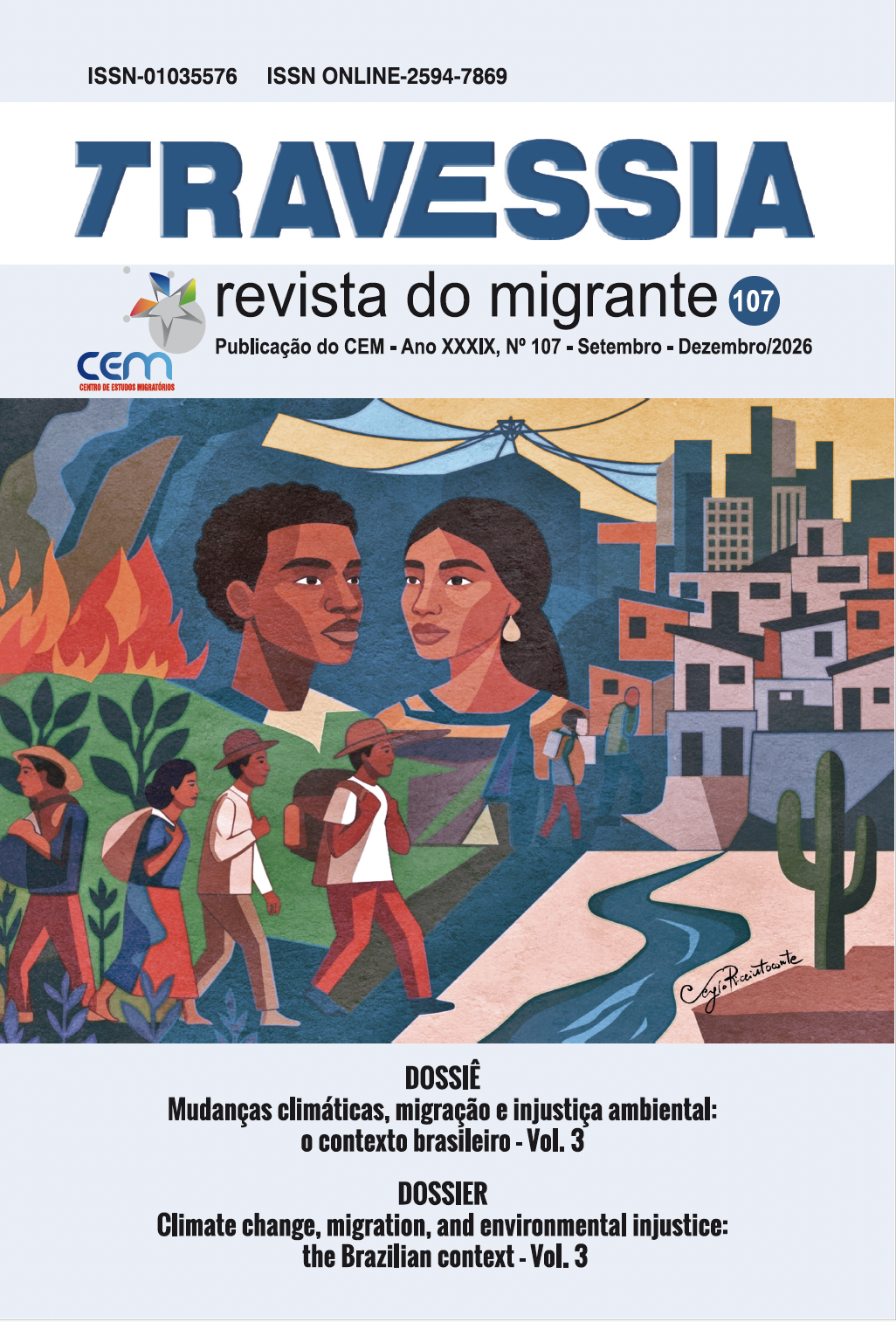
Socio-environmental transformations and adaptive migration in the Jequitinhonha Valley, Minas Gerais, Brazil
Keywords:
Climate change, Mechanization, Adaptive migration, Jequitinhonha ValleyAbstract
Migration in the Jequitinhonha Valley has historically been more than just a cultural practice: it is a survival strategy in the face of drought, job scarcity, and the difficulties of making a living from family farming. Traditionally, this migration was seasonal, related to the agricultural calendar, but today it is an adaptive migration, reflecting climate change and the modernization of the labor market, such as the mechanization of sugarcane harvesting. Adaptive migration is a flexible strategy that allows rural workers to combine different jobs and alternate varying lengths of time away from home, postponing permanent migration to the cities. This new migratory dynamic highlights the socio-environmental vulnerability of the rural population of the Jequitinhonha Valley, which faces worsening water shortages, loss of local opportunities, and economic transformations. Thus, adaptive migration is a form of social resistance, expressing rural communities’ struggle for social reproduction in the face of climatic and economic pressure.