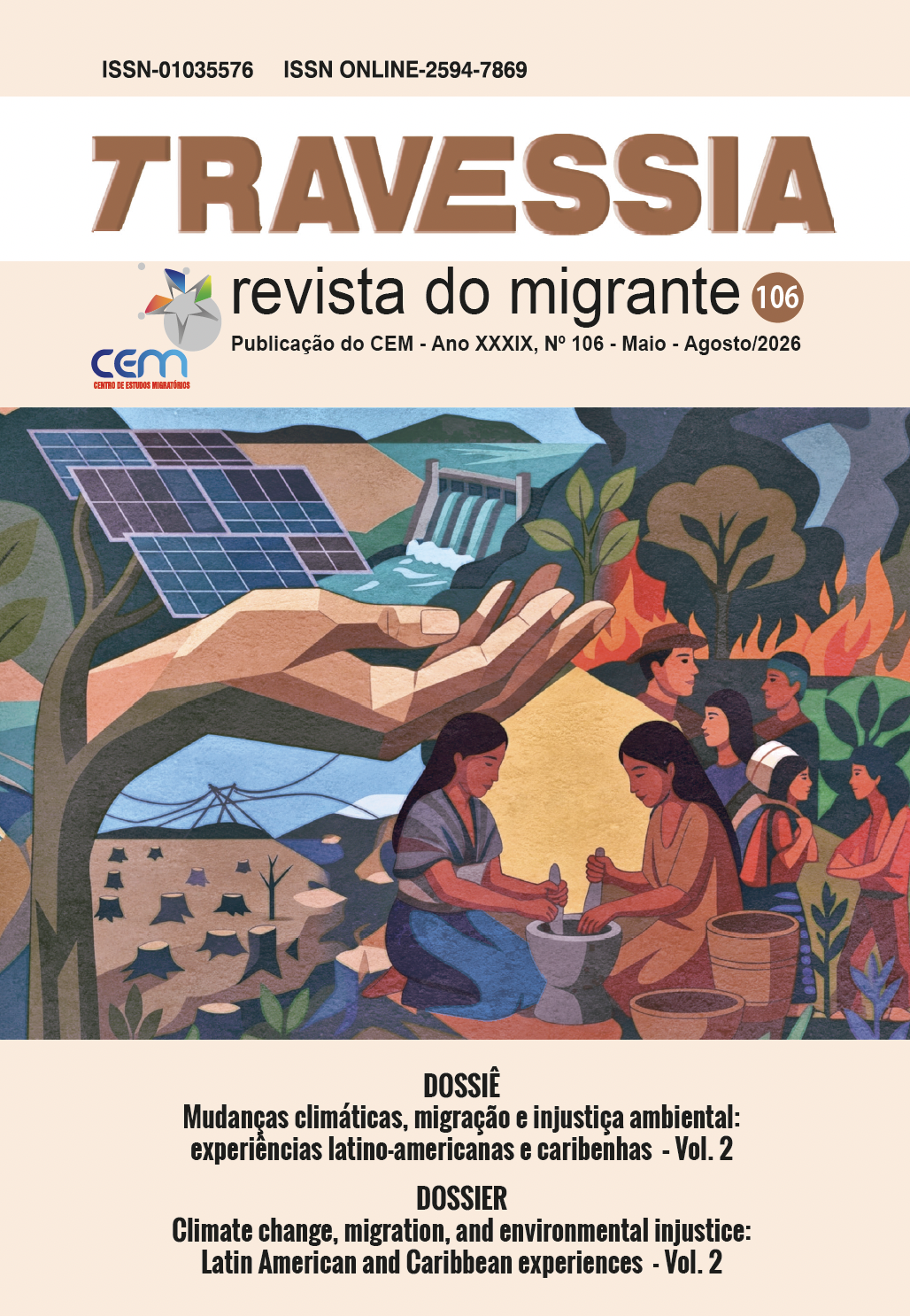
Cuerpo-Territorios in motion: climate (im)mobilities in light of international advisory opinions
Abstract
This article examines how the decolonial ecofeminist framework of cuerpo-territorio can deepen understandings of climate (im)mobility in Latin America by linking embodied, territorial, and relational experiences of displacement and immobility. It analyzes recent advisory opinions by the Inter-American Court of Human Rights and the International Court of Justice, situating them within broader debates on the legal protection of climate-displaced persons. Latin American experiences, particularly those of trans and travesti populations in Brazil affected by the 2024 Rio Grande do Sul floods, illustrate how extreme climate events both expose structural vulnerabilities and create openings for alternative forms of collective organization and territorial practice. By expanding on cuerpo-territorio, the article argues for climate governance rooted in differentiated, community-led approaches that recognize intersectionality, resist epistemic extractivism, and frame reparations not as charity but as legal and political obligation. Ultimately, it proposes that law, when informed by embodied territoriality, can become a tool for ecological and decolonial justice.